



The most exquisite designer swimwear loses its allure the moment it begins to pinch, gap, or sag. True luxury isn't just about the label; it's about the precision of the silhouette against your skin. You've likely felt the discomfort of straps that dig into your shoulders or the frustration of a cup that gapes when you move. These aren't flaws in your form, but rather signs that the structural tension of the garment is misaligned. Understanding exactly how should a bikini set fit is the first step toward achieving that coveted, effortless elegance for your next coastal getaway.
A perfect fit provides a secure, sophisticated foundation that moves with you, not against you. We'll show you how to identify high-quality construction and choose sizes that respect the integrity of premium fabrics. You'll discover the professional standards for support and shape, ensuring your swimwear feels as intentional as a tailored garment. This guide explores the essential markers of a refined fit, from tension levels in the bodice to the subtle architecture of the seat, providing you with the confidence to choose pieces that endure.
Key Takeaways
- Master the "Second Skin" standard to ensure your swimwear offers structural tension without causing uncomfortable pinching or digging.
- Learn the professional "Three-Point Check" to evaluate the bust, band, and leg line, helping you understand how should a bikini set fit for maximum security.
- Identify the nuances of different top silhouettes, including how to ensure underwire and ruffled designs sit perfectly across the collarbone.
- Utilize the "Pinch Test" on bikini bottoms to eliminate excess fabric and achieve a smooth, tailored look in the seat.
- Understand why high-quality Lycra and precision construction are essential for maintaining a garment’s "memory" and fit over time.
The Fundamentals of a Perfect Bikini Fit
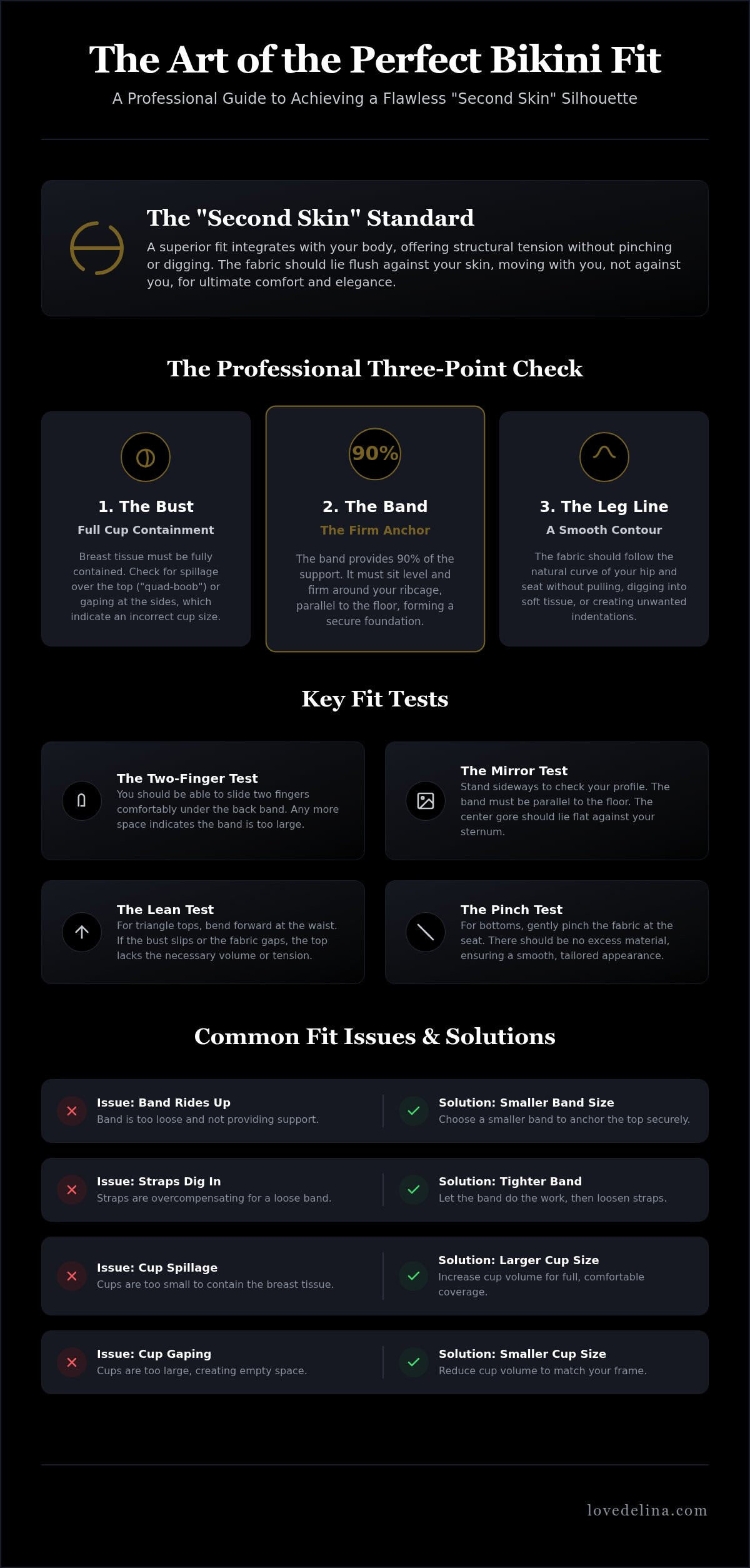
Achieving the "Second Skin" standard requires a delicate balance of tension and architecture. A bikini shouldn't merely sit on the body; it should integrate with it. This standard implies that the fabric remains flush against the skin during movement without creating indentations or red marks. While many believe tighter is better, excessive restriction compromises the fabric's integrity and your comfort. Understanding how should a bikini set fit starts with the Three-Point Check: a technical evaluation of the bust, the band, and the leg line.
First, the bust must be fully contained within the cup's frame. Second, the band should provide a firm, level anchor around the ribs. Third, the leg line must follow the natural curve of the hip without pulling or digging into the soft tissue. This technical approach ensures that limited-edition designer silhouettes maintain their intended form. While professional measurements provide a helpful starting point, they're not the final answer. The unique elasticity of luxury fabrics and your specific body proportions mean the mirror is often a more accurate judge than the tape measure.
Consider how water affects fabric. Water acts as a lubricant and adds weight to the fibers. High-quality Lycra has excellent memory, but almost all swimwear expands slightly when submerged. If a set feels marginally loose while dry, it will likely sag once wet. Aim for a fit that feels purposefully snug in the dressing room to ensure it remains secure in the surf.
The Band and Strap Tension
The band provides nearly 90% of a top's support. You should be able to slide two fingers comfortably under the back band; any more indicates the size is too large. Straps should rest lightly on the shoulders, providing lift rather than carrying the entire weight of the bust. If you notice red marks at the end of the day, the straps are doing too much work. Use the "Scoop and Swoop" technique: lean forward and gently guide all breast tissue into the cups to ensure the underwire or seam sits exactly where the breast meets the ribcage.
The Mirror Test for Silhouette Alignment
Stand sideways to the mirror to check your profile. The back band must remain parallel to the floor. If it arches toward the shoulder blades, the band is too loose and is being pulled up by the weight of the bust. For underwired styles, the center gore, the fabric between the cups, should lie flat against your sternum. Any space here suggests the cups are too small. Finally, check for "quad-boobing," where the tissue spills over the top edge, or gaping, which indicates the cup volume is too large for your frame.
Evaluating the Bikini Top: Support vs. Silhouette
The silhouette of a bikini top defines the overall aesthetic of your resort ensemble. While the previous section established the importance of band tension, the specific architecture of the top determines how should a bikini set fit to flatter your unique frame. Whether you're drawn to the minimalism of a triangle or the sculpted look of an underwire, the fit must align with your natural proportions to maintain a sophisticated presence.
Triangle and Halter Fit Precision
Triangle tops are deceptively simple. The base of each triangle should be adjustable enough to cover the outer curve of the bust, preventing side-spillage while maintaining a centered look. A common mistake is tying the halter neck too tightly to compensate for a loose base. This creates unnecessary strain on the neck muscles. Instead, ensure the support comes from the band around the ribs. The weight of the bust should be distributed across the back, not hanging from the neck.
- The Lean Test: Bend forward at the waist while in the dressing room. If the fabric gaps or the bust slips from the cups, the triangles lack the necessary volume or the ties require more tension.
- Side Coverage: The fabric should extend far enough toward the underarm to contain the breast tissue comfortably without pinching the skin.
Structured and Ruffled Silhouettes
Ruffled designs add a romantic dimension to swimwear but require careful placement to remain elegant. For example, an ecru ruffled off-the-shoulder top should sit securely across the collarbone. The elasticated edge must be firm enough to stay in place during movement, yet soft enough to avoid marking the skin. This style should allow for elegant arm movement without the bodice riding up or the ruffles losing their intended volume.
When evaluating padded vs. non-padded luxury sets, consider the cup's "memory." Quality padding should enhance the silhouette without creating a visible ledge between the skin and the fabric. If you find yourself between sizes, choosing the larger option often provides a more sophisticated, modest coverage that doesn't compromise the garment's design. For strapless bandeau styles, look for side-boning. These flexible vertical inserts maintain the garment's height and prevent the fabric from collapsing or rolling down at the sides.
A well-fitted top serves as the cornerstone of your beach attire. You might consider pairing these technical fits with curated luxury bikini sets designed to transition seamlessly from the shoreline to a sunset lounge.
Finding the Perfect Bikini Bottom Fit
A bikini bottom established the foundation of your resort silhouette. While the top often commands the most attention, the fit of the bottom determines the grace of your movement and the longevity of the garment's shape. Understanding how should a bikini set fit through the hips and seat is essential for maintaining a polished, sophisticated look that remains secure from the poolside to the ocean. A well-fitted bottom should feel like a firm embrace, providing enough tension to stay in place without creating unwanted indentations in the skin.
The most effective way to verify the fit of your swimwear is the "Pinch Test." Stand naturally and gently pull the fabric at the center of the seat. If you can pull more than an inch of material away from your body, the size is likely too large. This excess fabric will inevitably sag once submerged in water, leading to a heavy, unflattering appearance. Conversely, the crotch lining must sit perfectly flush against the body. Any bunching suggests the rise is too long for your torso, while visible pulling indicates the garment is too short, which can lead to discomfort and shifting during wear.
High-Waisted vs. Low-Rise Dynamics
The placement of the waistband is a matter of both comfort and aesthetic intent. High-waisted bottoms should typically hit at the narrowest part of your waist, often just above the navel, to create a sculpted, elongated line. If the waistband rolls down or flips during movement, the tension is insufficient for your frame. For those curating a 2026 wardrobe, our ultimate guide to luxury bikini sets provides deeper insights into choosing silhouettes that align with modern resort trends. Low-slung styles should rest securely on the hip bones, utilizing the body's natural architecture to remain stable without the need for excessive tightening.
Leg Openings and Elasticity
Leg openings require a precise balance between security and softness. You want the elastic to sit flat against the hip without "digging" or creating a visible bulge. If the fabric cuts into the soft tissue, the size is too small, which disrupts the clean lines of the silhouette. Quality seam construction is vital here. Luxury sets often utilize "invisible" or flat-lock seams that transition smoothly into the skin. This prevents the back coverage from shifting, ensuring you don't have to make constant adjustments as you move. A higher cut on the leg can further elongate the legs, provided the elasticity is high enough to maintain its position without riding up.
Common Fit Mistakes and How to Correct Them
Identifying fit errors is just as important as the initial selection. Many women settle for minor discomfort, assuming it's an inherent byproduct of swimwear. It isn't. A sophisticated silhouette depends on correcting technical misalignments that disrupt the garment's flow. When you understand how should a bikini set fit, you can spot these subtle issues before they compromise your confidence on the sand. Whether it's a cup that won't stay flush or a waistband that creates unwanted pressure, most issues stem from a mismatch between the fabric's tension and your body's unique proportions.
One of the most frequent grievances is "The Gap," where the top edge of the cup doesn't rest against the skin. While your first instinct might be to choose a smaller cup size, the culprit is often a loose back band. If the band isn't firm enough to act as an anchor, the cups will naturally tilt forward and away from the chest. Conversely, the "Dig-In" dilemma occurs when elastics cut into the hips or shoulders. This isn't always a sign to size up; it often indicates that the garment's elastic is too narrow or lacks the high-quality Lycra content found in luxury pieces. Premium fabrics are designed to distribute pressure across a wider surface area, preventing that pinched look.
Sagging fabric is another common pitfall, typically seen in older suits or lower-quality materials that have lost their "memory." Saltwater and chlorine break down weak elastic fibers over time. Investing in designer bikini sets ensures you're wearing materials engineered to retain their shape even after repeated submersion. Finally, consider the "Bikini vs One Piece" debate regarding torso length. If you have a long torso, one-pieces may pull uncomfortably at the shoulders or crotch. A bikini set offers a superior fit in these cases by allowing the top and bottom to function as independent structural units.
Troubleshooting the Bust
If you lack lift, examine your strap-to-band ratio. Tightening the straps should be your last resort; instead, ensure the band is snug enough to provide the primary support. If you've adjusted the band and still experience gaping or spilling, it might be time to reconsider the silhouette. Some frames find better alignment in a balconette than a triangle. You can explore our guide to curating your luxury swimwear silhouette to determine which cut best serves your natural shape.
Troubleshooting the Bottoms
If your bottoms are constantly riding up, they're likely a size too small. The fabric is trying to find more room by moving toward the narrowest part of your frame. Another tell-tale sign of a fit mismatch is the "Smile" fold. This happens when horizontal fabric bunches at the front hip, indicating the rise is too high or there's excess fabric length for your torso. Always perform a "sag test" while the suit is dry. If the seat feels even slightly loose in the dressing room, it will definitely sag once the weight of the water pulls the fibers down.
Investing in Quality: Why Tailored Construction Matters
The architecture of a luxury garment is defined by the details that remain invisible to the casual observer. Precision seams and limited-edition fabrics provide a structural integrity that mass-market alternatives cannot replicate. While lower-quality swimwear often loses its shape after a single season, high-quality Lycra possesses a superior "memory." This technical term refers to the fabric's ability to return to its original dimensions after being stretched. When you evaluate how should a bikini set fit for the long term, this resilience is the most critical factor. A premium piece should maintain the same tension and support in late 2026 as it did on its first wear.
Selecting curated women's bikini sets online allows you to invest in matching proportions that have been engineered to work in tandem. This intentionality in design ensures that the tension in the top complements the rise of the bottom, creating a balanced silhouette that feels secure. Mastery of construction means the garment doesn't just cover the body; it refines it through calculated fabric placement and tension.
The Role of Fabric Density in Fit
Density is the silent partner of a sophisticated silhouette. Double-lining is a non-negotiable standard for luxury swimwear, particularly for lighter shades. Premium ecru fabrics utilize high-denier fibers to maintain total opacity even when wet. This thickness also provides a smoothing effect, ensuring the fabric sits flush against the skin without highlighting every minor texture. The tactile difference of luxury resort wear is immediate; the fabric feels substantial and cool to the touch, offering a sense of security that thinner, "value" materials lack. This density is what prevents the sagging and transparency issues common in fast-fashion alternatives.
Curating Your Resort Wardrobe
A perfectly fitted bikini serves as the foundational layer of a complete resort wardrobe. It should transition effortlessly from a morning swim to an afternoon social engagement with the addition of refined layers. Pairing a structured bikini top with long trousers with transparent panel in ecru creates a cohesive aesthetic that balances modesty with a modern, airy allure. This styling approach emphasizes the importance of a secure fit; if the bikini base is misaligned, the layers above it will never sit correctly. To ensure a confident, high-end presence, use this final checklist before heading to the coast:
- The Band Anchor: Verify the back band remains level and parallel to the floor during arm movement.
- Flush Contours: Ensure all edges of the cups and leg openings sit flat against the skin without gaping.
- Fabric Memory: Confirm the seat passes the pinch test, showing no signs of excess fabric that could sag when wet.
- Seamless Transition: Check that the waistband sits comfortably at your natural waist or hip without creating indentations.
By prioritizing these professional standards of fit and construction, you ensure your swimwear remains a timeless investment in your personal style.
Elevating Your Resort Presence Through Precision
Achieving a sophisticated coastal look begins long before you step onto the sand. It starts with a technical understanding of how should a bikini set fit, ensuring every seam and strap works in harmony with your silhouette. By mastering the three-point check and the seat pinch test, you move beyond mere sizing into the realm of tailored elegance. A perfect fit isn't just about comfort; it's the structural foundation that allows you to move with quiet confidence from a private cove to a sunset lounge.
True luxury endures through superior construction. High-denier fabrics and expertly tailored silhouettes ensure your swimwear maintains its integrity and memory season after season. When you prioritize these professional standards, you invest in a wardrobe that feels as refined as it looks. Discover our sophisticated limited-edition designs, each crafted with high-denier luxury fabrics for a lasting, secure fit. Explore the Love Delina Curated Bikini Collection to find the cornerstone of your next coastal getaway. Embrace the effortless elegance that comes from a garment designed specifically for resort life.
Frequently Asked Questions
How do I know if my bikini top is too small?
A bikini top is too small if you experience "quad-boobing" or tissue spillage over the top or sides of the cups. The center gore should sit flat against your sternum; if it lifts away, the cup volume is insufficient. Check for red marks or digging at the underbust. If the fabric cuts into the skin rather than resting flush against it, you need to increase the cup size while maintaining a firm band.
Should I size up or down if I am between bikini sizes?
When caught between sizes, we recommend sizing down for a more secure, "second skin" fit. Swimwear fabrics naturally expand slightly when submerged, so a snug dry fit prevents sagging or shifting in the water. However, if the smaller size creates visible indentations or compromises the garment's clean lines, choose the larger size. A sophisticated silhouette depends on the fabric lying flat against your frame without excessive tension.
How can I tell if my bikini bottoms are the right size?
Your bikini bottoms are the correct size when the waistband sits flat against your hips without rolling or pinching. Perform the "Pinch Test" by pulling the fabric at the center of the seat; if you can pull away more than an inch of material, the size is too large. The crotch lining should sit flush against the body without bunching, ensuring a smooth, tailored appearance that remains secure during movement.
What should I do if my bikini straps are digging into my shoulders?
Straps that dig into the shoulders are usually a sign that your back band is too loose. The band should provide nearly 90% of the support for your bust. When it fails to act as a firm anchor, the straps are forced to carry the weight, leading to discomfort and red marks. Tighten the band or choose a smaller band size to alleviate the pressure on your shoulders and restore a balanced silhouette.
How should a high-waisted bikini fit around the stomach?
A high-waisted bikini should hit at the narrowest part of your waist, typically just above the navel, to create an elongated silhouette. The waistband must stay in place during movement; if it rolls down or flips, the tension is insufficient. It should provide a gentle, smoothing effect without creating pressure points on the stomach. This ensures the garment remains secure and sophisticated, whether you're lounging or active in the surf.
Will my luxury bikini set stretch out after the first wear?
High-quality luxury fabrics possess superior "memory," allowing them to return to their original shape after wear. While most swimwear expands slightly when wet, a premium set won't permanently stretch out or lose its elasticity. Understanding how should a bikini set fit initially is vital; it should feel purposefully snug when dry. This ensures that the minor relaxation of the fibers in water doesn't result in a sagging or unstable fit.
How can I prevent my bikini from gaping at the cups?
Gaping is often a result of a loose back band rather than a cup that is too large. When the band isn't firm, the cups naturally tilt forward and away from the chest. First, ensure you can only fit two fingers under the back band for optimal support. If gaping persists with a secure band, the cup volume is too high for your frame, or the specific silhouette may not align with your natural shape.
Is it normal for a bikini to feel tighter when it is dry?
It's entirely normal for a bikini to feel tighter when dry. Water acts as a lubricant and adds weight to the fibers, causing the fabric to relax and expand. For this reason, you should prioritize a firm, secure fit in the dressing room. A suit that feels slightly loose while dry will inevitably sag and shift once you submerge, compromising both the sophisticated look of the garment and your personal comfort.


