



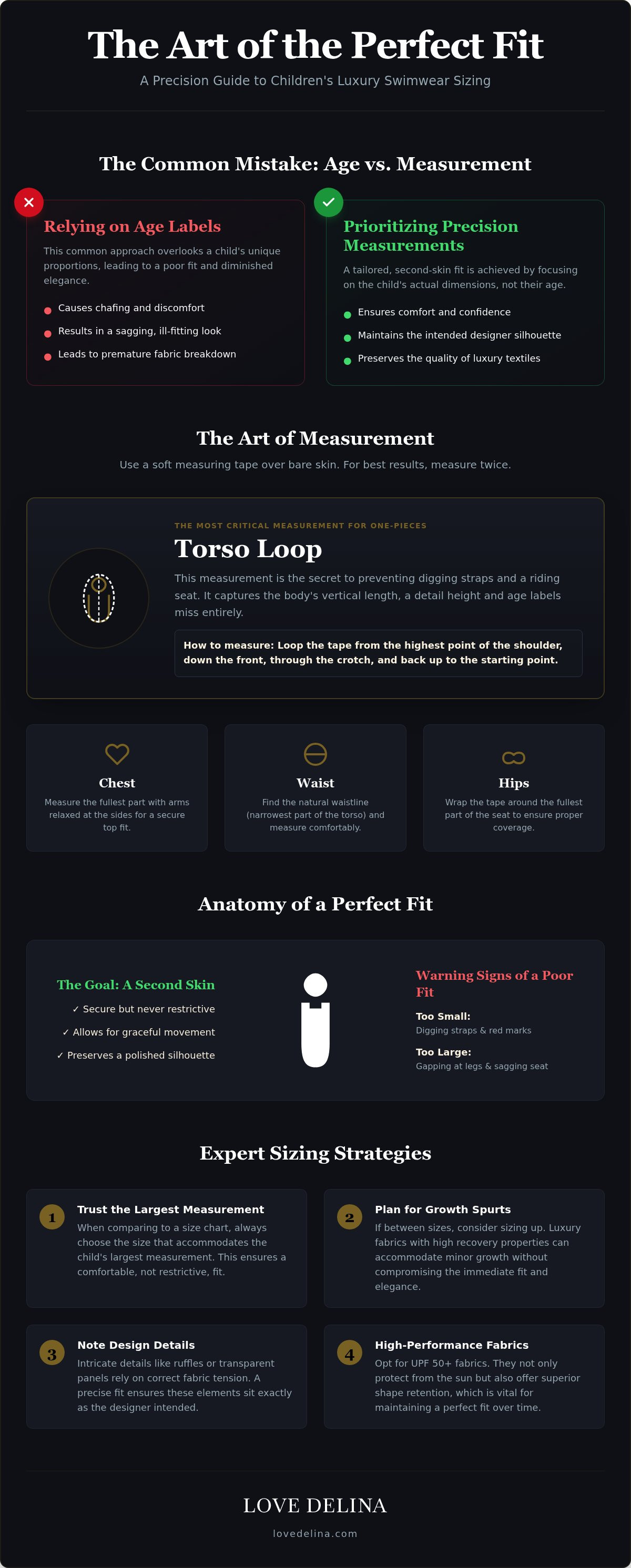
Relying on a child's age to determine their swimwear size is the most frequent mistake in luxury outfitting. It's a common frustration for discerning parents who seek a polished aesthetic only to find a piece causes chafing or begins to sag after just a few weeks of wear. The gap between generic age labels and a child's unique proportions often results in a fit that lacks the intended elegance of a designer silhouette.
We believe that a perfect fit is the foundation of confidence and comfort. You'll learn exactly how to choose kids swimsuit size by mastering precision measurement techniques and understanding the recovery properties of luxury textiles. By focusing on the nuances of torso girth rather than just height, you can ensure that every bikini or one-piece looks perfectly tailored to your child's frame.
This 2026 guide provides a sophisticated framework for selecting high-performance, UPF 50+ fabrics that retain their shape. We'll explore the essential measurements for a second-skin fit and offer insights into fabric science that prevent the disappointment of ill-fitting garments. Prepare to curate a summer wardrobe that offers both lasting quality and impeccable style.
Key Takeaways
- Prioritize torso girth over age labels to ensure a tailored silhouette that prevents sagging or discomfort.
- Discover exactly how to choose kids swimsuit size by aligning precise body measurements with the unique recovery properties of luxury textiles.
- Master the growth spurt strategy to allow for seasonal changes without compromising the immediate elegance of the fit.
- Understand how design details like ruffles and transparent panels influence fabric tension and the overall comfort of the garment.
- Learn to navigate designer size charts by focusing on the largest measurement to maintain a sophisticated resort aesthetic.
Understanding the Nuance of Children’s Swimwear Sizing
Luxury swimwear demands a higher standard of precision than everyday playwear. While many parents rely on age as their primary compass, this approach often overlooks the architectural intent of a designer piece. Learning how to choose kids swimsuit size involves shifting focus from a number on a tag to the actual proportions of the child's body. A resort fit, unlike a tight athletic cut, prioritizes a smooth silhouette that allows for graceful movement without sacrificing structural integrity. A well-chosen size preserves the tension of the fabric, ensuring that intricate details like transparent panels or delicate ruffles sit exactly where the designer intended. This balance is what distinguishes a curated holiday look from a generic one.
The Pitfalls of Age-Based Labeling
Age is a chronological marker, not a physical one. Two seven-year-olds can possess vastly different skeletal structures, making age-based labels the least reliable metric in high-end fashion. While there are international standards for clothing sizes, these often fail to account for the rapid vertical growth spurts that affect shoulder-to-crotch length. European brands frequently utilize height in centimeters for greater accuracy, whereas US brands often stick to age ranges that can be misleading. For a swimsuit to maintain its elegance, the torso length must be the guiding measurement. If the suit is too short for the torso, the fabric is forced to overextend; this prematurely breaks down the luxury elastic fibers and leads to a sagging appearance after only a few wears.
Anatomy of a Perfect Fit
A well-fitted suit provides more than just aesthetic appeal; it offers a psychological foundation for a child's confidence. When a swimsuit fits like a tailored garment, the child moves with ease rather than adjusting shifting straps or tugging at a riding hem. You can identify a sub-optimal fit through clear visual cues. Digging straps and red marks on the shoulders indicate the suit is too small, often due to an underestimated torso girth. Conversely, gapping at the leg openings or a sagging seat suggests the suit is too large, which compromises the sophisticated look of Love Delina's limited-edition pieces. A perfect fit should feel secure but never restrictive, functioning as a second skin that supports active play while maintaining a polished demeanor. Mastery of how to choose kids swimsuit size ensures the garment remains a highlight of the summer wardrobe rather than a source of distraction.
The Art of Measurement: Determining Accurate Dimensions
Achieving a tailored look begins with a quiet moment and a soft measuring tape. Precision is the hallmark of luxury, and to maintain the intended silhouette of high-end garments, you must start with a foundation of accurate data. Measuring over bare skin or a very thin layer is essential. Bulky clothing distorts the numbers, leading to a fit that feels clumsy rather than custom. Mastering how to choose kids swimsuit size begins with these tangible details. It's the most effective way to avoid the common pitfalls of sagging fabric or restrictive seams that distract from a sophisticated holiday experience.
The Critical Torso Loop Measurement
The torso loop is the most frequently overlooked metric in children's fashion, yet it's the secret to a perfect fit for one-pieces. This measurement accounts for the vertical volume of the child's body, which height alone cannot capture. To find it, place the tape on the highest point of the shoulder. Run it down the front of the body, through the crotch, and back up the rear to the starting point on the shoulder. This full circle ensures the garment has enough length to avoid digging at the shoulders or riding up at the seat. Children with longer torsos often require a larger size even if their age or weight suggests otherwise. This measurement is non-negotiable for preserving the clean lines of a designer silhouette.
Chest, Waist, and Hip Precision
For bikini sets, focus shifts toward horizontal precision. Measure the fullest part of the chest with the child's arms relaxed at their sides to ensure the top offers both security and style. Find the natural waistline by identifying the narrowest part of the torso; the tape should rest comfortably against the skin without being pulled tight. For the hips, ensure the tape wraps around the fullest part of the seat. This provides the necessary coverage for sophisticated designs and prevents the fabric from shifting during movement. Consistent measurements across these three points allow you to compare your data against designer charts with absolute confidence.
Measure twice. Children are rarely still, and even a slight shift in posture can alter the results significantly. Fidgeting, slouching, or holding a breath can easily add or subtract an inch from the tape. Taking two sets of measurements ensures your data is reliable before you select from a curated collection of designer swimwear. This extra minute of care prevents the frustration of returns and guarantees the final look is as elegant as the designer intended. It's the final step in ensuring the garment performs as beautifully as it looks.
Navigating Size Charts and Fabric Elasticity
Translating measurements into a final selection requires an understanding of how luxury textiles behave. Most mass-market polyester suits stretch easily and lose their shape quickly. In contrast, designer pieces utilize high-weight Lycra and Spandex to provide superior fabric recovery. This term refers to the material's ability to return to its original silhouette after being stretched. When you evaluate how to choose kids swimsuit size, remember that a premium suit should feel snug during the first fitting. This initial firmness is a sign of quality; it ensures the garment won't become heavy or sagging once it meets the water.
Designer size charts are curated with specific silhouettes in mind. If your child's measurements fall across multiple sizes, prioritize the largest dimension. For one-pieces, this is almost always the torso loop. For bikini sets, it's often the chest or hip. Choosing based on the largest metric prevents the fabric from over-stretching, which can cause the colors to appear faded or the texture to thin out over time. This precision preserves the intentionality of the design throughout the summer season.
Fabric Composition and Fit Behavior
The finish of a fabric significantly impacts its perceived elasticity. Matte textiles often feel more substantial and offer a firmer hold, while shiny or metallic finishes may provide a slightly more generous stretch. Lined swimsuits add another layer of complexity. While a lining provides essential structure and prevents transparency, it also reduces the initial "give" of the garment. This is why selecting quality materials is essential for those sourcing children's beachwear online. A well-constructed, lined piece will maintain its tailored look for several seasons, whereas an unlined, low-recovery suit will likely fail after a single month of use.
Interpreting 'Between Sizes' Scenarios
Finding your child between two sizes is common. The decision depends entirely on the silhouette. For one-pieces, always size up to accommodate the torso length. A suit that is too short vertically will dig into the shoulders and compromise the child's comfort. For bikinis, however, staying true to size is often better to ensure waist security. A loose bikini bottom can shift during active play, which detracts from the polished aesthetic. Always consult the brand's specific fit notes, as limited-edition collections may feature unique tension requirements due to decorative elements like ruffles or transparent panels. This nuanced approach ensures the final fit is both secure and sophisticated.
The Growth Spurt Strategy: Balancing Longevity and Safety
A frequent concern for parents is the rapid pace of childhood growth. It's tempting to size up significantly to ensure a garment lasts beyond a few weeks, but this approach often compromises the very elegance you seek. When considering how to choose kids swimsuit size, precision remains paramount for both safety and style. A suit that is too large doesn't just look unpolished; it creates drag in the water. This extra fabric can become heavy and cumbersome, potentially hindering a young swimmer's movements. To balance longevity with a tailored appearance, look for a fit that allows for approximately 2 inches of growth without appearing baggy or loose.
Safety remains the ultimate priority. An oversized swimsuit can shift unexpectedly, causing straps to fall or waistbands to slide during active play. Adjustable features are the hallmark of thoughtful luxury design. Tie-straps and high-recovery elasticated bands allow a garment to expand with the child while maintaining a secure, sophisticated silhouette. These intentional design elements ensure the piece remains functional and elegant throughout the season, providing a curated fit that adapts to your child's changing proportions.
The 'One Finger' Rule for Straps
Testing the tension of shoulder straps is a simple way to gauge the potential for growth. You should be able to slide one finger comfortably under the strap at the shoulder. If you can fit more than one finger, the suit is likely too large and will gap at the chest or ride up at the back. If you can't fit a finger at all, the strap is already too tight and will likely leave red marks on the skin. This balance ensures comfort during long days at the beach while providing just enough room for a mid-summer growth spurt.
Sizing for the Entire Season
Timing your purchase is a strategic decision. Buying in early spring requires a slightly more forward-looking approach than a mid-summer acquisition. Use your child's current, well-fitting clothing size as a baseline, but always prioritize the torso measurements discussed in previous sections. For those preparing for an upcoming excursion, consulting a curated guide for sophisticated family travel can help you select pieces that are as practical as they are beautiful. Discover the perfect balance of fit and fashion by exploring our limited-edition swimsuits for kids, designed to maintain their exquisite shape through every summer milestone.
Curating the Perfect Fit for Every Silhouette
Selecting a silhouette is the final step in the curation process. Once you understand how to choose kids swimsuit size based on technical measurements, you must consider how specific design elements interact with the child's frame. Different styles offer varying levels of flexibility. A bikini might accommodate a longer torso more easily than a one-piece, while a one-piece provides the continuous lines necessary for a truly sophisticated resort look. The intentionality of the design, from the placement of ruffles to the integration of transparent panels, dictates how the fabric will ultimately rest against the skin.
The Bikini Advantage
Bikini sets offer a level of versatility that is often necessary for children with proportions that don't align perfectly with standard charts. Because the top and bottom are separate, the vertical length of the torso becomes less of a restrictive factor. This makes bikinis an excellent choice for children who are tall for their age but have a lean build. When fitting a bikini, the primary focus is the security of the waistband and the chest band. These should sit flat against the body without shifting during active movement. A well-fitted set ensures that even during jumping or diving, the garment maintains its elegant positioning and coverage.
One-Piece Elegance
The one-piece remains a staple of sophisticated holiday style, offering a polished and cohesive aesthetic. However, this silhouette requires the highest level of measurement precision. Design details like transparent panels, often found in our ecru collections, require a taut fit to prevent the fabric from puckering or folding. If the suit is too long, these panels will lose their architectural clarity; if it's too short, they may distort the overall silhouette. Proper seat coverage is also essential. A perfectly sized one-piece should provide a smooth, continuous line from shoulder to hip, ensuring the child feels secure and the look remains refined.
Body type plays a significant role in how a suit performs. For children with an athletic or rounded build, fabrics with higher elasticity are preferable to accommodate movement without restriction. Leaner frames benefit from textural details like ruffles, which add dimension while maintaining a close fit. Before finalizing your selection, review this final checklist to ensure total confidence in your purchase:
- Verify the Torso: Does the vertical measurement align with the size chart to prevent shoulder digging?
- Check the Openings: Are the leg and arm openings snug enough to stay in place without leaving marks?
- Assess the Details: Will the ruffles or transparent panels sit flat against the body?
- Confirm the Fabric: Does the material offer the high recovery needed to prevent mid-summer sagging?
By balancing these stylistic nuances with your recorded dimensions, you move beyond simple shopping and into true wardrobe curation. A well-chosen suit is an investment in your child’s comfort and your peace of mind, ensuring every moment by the water is defined by ease and elegance.
Mastering the Art of the Perfect Fit
Precision measurement is more than a technical necessity; it's an act of curation that ensures your child moves with effortless confidence. By prioritizing the torso loop measurement and understanding the superior recovery properties of luxury textiles, you elevate swimwear from a simple utility to a tailored statement of style. A perfect fit preserves the architectural integrity of designer silhouettes, preventing the sagging or discomfort that often accompanies mass-market alternatives.
Mastering how to choose kids swimsuit size allows you to invest in limited-edition pieces with absolute certainty. Our collection features high-recovery luxury fabrics and sophisticated designs that are exclusively available online to ensure rarity and quality. When you align precise dimensions with the right silhouette, you create a holiday wardrobe that's as resilient as it is beautiful.
Prepare for your next coastal escape with pieces designed for the discerning young traveler. Explore our curated collection of children's swimsuits for your next getaway and discover the difference that an impeccable fit makes.
Frequently Asked Questions
How do I know if my child needs a size up in a one-piece?
Your child likely needs a size up if the shoulder straps leave red marks or if the leg openings ride up during movement. These visual cues indicate that the vertical tension is too high for their current height. If the fabric appears distorted or overly translucent across the chest, the garment has reached its maximum stretch capacity. Sizing up ensures the sophisticated silhouette remains intact without compromising the child's comfort.
Should I buy a swimsuit based on my child's current clothing size?
Relying on street clothing sizes is generally inaccurate for luxury beachwear. Everyday garments are designed with more ease, whereas high-end swimsuits require a precise, second-skin fit to function correctly in the water. We recommend ignoring standard dress or trouser sizes and focusing entirely on current body measurements. This approach is the most reliable way to understand how to choose kids swimsuit size for limited-edition designer pieces that prioritize a tailored aesthetic.
What is the most important measurement for a kid's swimsuit?
The torso girth measurement is the most critical metric for ensuring a perfect fit in one-piece silhouettes. This measurement captures the vertical volume of the body, which height and weight alone often overlook. To find it, run a soft tape from the shoulder, through the crotch, and back to the starting point. This torso loop determines if the suit will sit comfortably on the shoulders while providing adequate coverage at the seat.
How much should a child's swimsuit stretch when wet?
High-quality luxury fabrics should experience minimal expansion when wet. While mass-market polyester often sags after absorbing water, premium materials with high Lycra content maintain their structural integrity and recovery. You may notice a slight increase in weight, but the garment shouldn't grow in size or lose its original shape. If a suit stretches significantly when submerged, it's a sign that the elastic fibers have reached the end of their lifespan.
Is it better for a kid's swimsuit to be slightly tight or slightly loose?
It's always better for a swimsuit to feel snugly fitted rather than loose. A slightly tight fit ensures the garment stays in place during active play and prevents the fabric from sagging once it becomes wet. Loose fabric can create air pockets or fill with water, which creates drag and poses a safety risk in the pool. A snug fit preserves the elegant, polished appearance that defines the Love Delina aesthetic.
Can I use a height/weight chart if I don't have a measuring tape?
Height and weight charts offer a basic starting point, but they lack the precision required for a designer fit. If you don't have a soft measuring tape, you can use a piece of non-stretch string to capture the dimensions and then measure the string against a standard ruler. This method provides a much more accurate representation of the child's proportions than generic charts, which often ignore specific body types and torso lengths.
How do I measure a toddler who won't stand still?
Measuring a restless toddler is often easier when they are lying flat on a comfortable surface. You can also take measurements from a current, well-fitting swimsuit that hasn't yet lost its elasticity. Lay the garment flat and measure the width and the vertical loop, then compare these numbers to the designer size chart. This technique helps you determine how to choose kids swimsuit size without the frustration of a fidgeting child, ensuring the final piece fits perfectly.
Do luxury kids' swimsuits run smaller than department store brands?
Luxury swimsuits may feel smaller than department store brands because they utilize higher-density fabrics and full linings for superior structure. While mass-market brands often use thin, highly elastic materials that stretch easily, designer pieces are engineered to hold a specific silhouette. This firmer fit is intentional and ensures the garment doesn't sag over time. Always prioritize your child's actual measurements over the age label found in common retail chains to ensure a sophisticated result.


