



The most striking element of a luxury summer wardrobe is often its most fragile; the luminous, unblemished white bikini. Many collectors assume that a single season of salt and sunscreen marks the end of a suit's life, yet the secret to longevity isn't more aggressive washing. It's a precise science of chemical neutralization. Understanding how to keep white swimsuits from turning yellow requires a shift from standard laundry habits toward a more curated, intentional approach to fabric preservation.
You've likely felt the disappointment of discovering a dull, ivory tint where a crisp ecru once lived. It’s a common frustration for those who value the refined aesthetic of high-end swimwear but worry about the impact of harsh cleansers on delicate silhouettes. This guide promises to transform your maintenance routine into a masterclass in restoration. We'll explore expert-led techniques to dissolve sunscreen oils, maintain fabric elasticity, and navigate the latest 2026 textile safety regulations to keep your collection pristine for years to come.
Key Takeaways
- Understand the chemical reactions behind oxidation and learn precisely how to keep white swimsuits from turning yellow through immediate post-swim neutralization.
- Discover the "Golden Hour" rule for rinsing luxury fabrics to prevent chlorine and sunscreen oils from bonding with synthetic fibers.
- Master gentle, expert-approved restoration techniques using natural agents that lift dullness without damaging delicate ruffles or transparent panels.
- Learn the essential "flat-dry" method to maintain the architectural integrity and elasticity of high-end bikini sets and designer silhouettes.
- Explore the sophisticated shift toward ecru palettes as a forgiving, high-fashion alternative to traditional white swimwear.
The Science of Discoloration: Why White Swimwear Turns Yellow
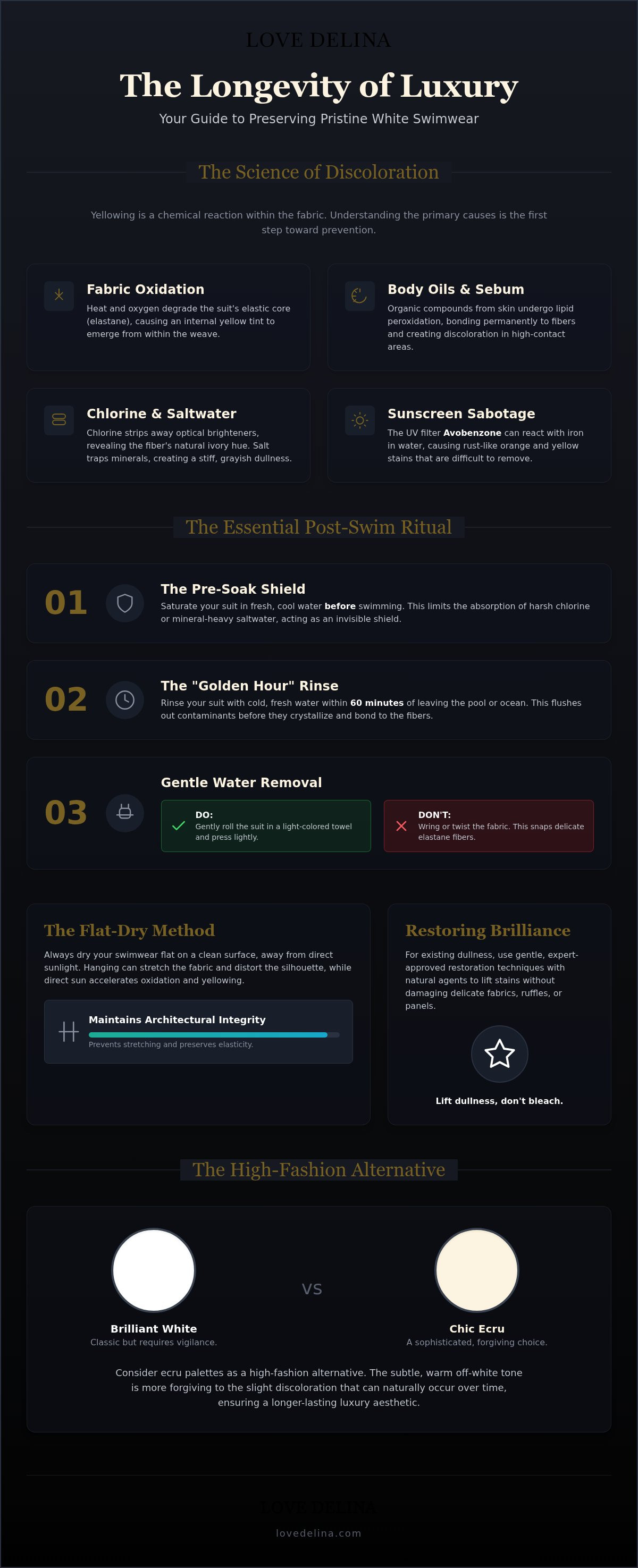
Yellowing is rarely a surface-level stain. It's a chemical evolution within the fabric itself. High-end swimwear often utilizes a sophisticated blend of polyamide and elastane to achieve that signature sculpt and soft hand-feel. However, these synthetic fibers are inherently prone to oxidation. When exposed to consistent heat and oxygen, the elastic core begins to degrade. This internal breakdown manifests as a dull, yellowish tint that seems to come from within the weave. Mastering how to keep white swimsuits from turning yellow starts with recognizing that your suit is a reactive textile, not an inert object.
Sebum and body oils represent a persistent biological threat to your summer wardrobe. These organic compounds accumulate in areas of high contact, specifically the bust and underarms. Over time, these oils undergo a process called lipid peroxidation. This doesn't just alter the visual aesthetic; it can eventually weaken the fabric's structural integrity. Without proper neutralization, these oils bond permanently to the synthetic fibers, creating the "bust and pit" discoloration that many mistake for simple sweat stains.
Chlorine vs. Saltwater: Different Threats to White Fabric
Chlorine is a powerful oxidant. While it's often associated with sanitization, in a pool environment, it behaves as a slow-acting bleach. Understanding how bleaching agents work reveals that they react with colored organic compounds to make them colorless. In the context of white swimwear, this process actually strips away the optical brighteners. These are specialized chemical additives used during manufacturing to reflect blue light, which tricks the eye into seeing a "whiter than white" brilliance. Once these brighteners are stripped by pool chemicals, the natural, slightly ivory hue of the raw synthetic fiber is revealed. Saltwater presents a different challenge. It doesn't strip color as aggressively, but it traps microscopic minerals and salt crystals within the knit. This creates a stiff, greyish-yellow dullness that obscures the fabric's original luminosity.
The Sunscreen Sabotage: Avobenzone and Oxidation
Your choice of SPF is often the silent culprit behind sudden discoloration. Many luxury sunscreens contain Avobenzone, a common UV filter. When this ingredient meets the iron found in many water sources, it triggers a chemical reaction remarkably similar to the formation of rust. This creates stubborn orange or yellow streaks that are notoriously difficult to lift from delicate white bikinis. Oil-based formulas are particularly problematic. They saturate the fibers more deeply than mineral-based alternatives, making them harder to rinse out. To protect your investment, apply your sunscreen at least 20 minutes before dressing. This allows the product to absorb into the skin rather than transferring onto your suit. Understanding these reactions is the first step in learning how to keep white swimsuits from turning yellow through every beach excursion.
The Essential Post-Swim Ritual: Prevention Strategies
Preserving the luminous quality of designer swimwear is a matter of timing and chemistry. The most critical window for fabric care is the first 60 minutes after you leave the water, a period experts call the "Golden Hour." During this time, chlorine, salt, and minerals are still in a liquid state on the fabric surface. If left to dry, these elements crystallize and bond with the synthetic fibers, making them significantly harder to remove. Mastering how to keep white swimsuits from turning yellow begins with an immediate, cold-freshwater rinse to neutralize pH levels and flush out environmental contaminants before they can settle.
One of the most effective prevention techniques is the "Pre-Soak" method. Before entering a pool or the ocean, thoroughly drench your suit in fresh, cool water. Synthetic textiles like polyamide act like a sponge; they have a limited absorption capacity. By saturating the fibers with clean water first, you ensure the fabric absorbs less chemically treated pool water or mineral-heavy brine. This simple step acts as an invisible shield for your investment. When wearing intricate bikini sets with delicate detailing, this proactive saturation is essential for maintaining architectural integrity.
The physical handling of the garment is just as important as the water temperature. You should never wring or twist a luxury swimsuit to remove excess water. This aggressive motion snaps the delicate elastane fibers that provide the suit's shape and stretch. Instead, lay the suit flat on a clean, light-colored towel, roll it up gently like a sleeping bag, and apply light pressure to absorb moisture. This preserves the elasticity and prevents the structural sagging that often precedes discoloration.
Step-by-Step: The Professional Hand-Wash
Always select a gentle, pH-neutral detergent specifically formulated for delicates or activewear. Avoid standard grocery store detergents, as many contain heavy fragrances and optical brighteners that can actually accelerate the yellowing process over time. Use the "Agitation without Friction" technique: submerge the suit in cool water and gently swirl it, allowing the soapy water to move through the fibers without rubbing the fabric against itself. This lifts body oils and sunscreen residue effectively. Continue rinsing with fresh water until every trace of bubbles is gone and the water runs perfectly clear.
Pre-Treating for Maximum Protection
For those seeking an extra layer of defense, a 1:4 distilled white vinegar-to-water soak serves as an excellent natural sealant. Vinegar helps to close the fibers and lock in the "optical white" finish, making it a vital part of the strategy for how to keep white swimsuits from turning yellow. Additionally, consider using specialized swimsuit washes designed to neutralize chlorine on a molecular level. These products are particularly useful if you are a frequent pool swimmer, as they break down the harsh chemicals that standard water cannot always reach. A quick, disciplined rinse after every single dip remains the non-negotiable foundation of luxury care.
Restoring Brilliance: Safe Whitening Methods for Designer Pieces
Restoration is an art of patience rather than force. When a garment loses its initial luster, the instinct is often to reach for aggressive bleaches. However, chlorine-based bleach is the primary antagonist of synthetic fibers; it strips the fabric's protective coating and permanently weakens the elastane. For those mastering how to keep white swimsuits from turning yellow, oxygen-based whiteners are the superior choice. These products use a gentle hydrogen peroxide reaction to lift organic stains without compromising the structural integrity of the suit. A localized baking soda paste, created by mixing three parts baking soda with one part water, offers a targeted solution for concentrated oxidation points. Apply the paste to the affected area, let it sit for 15 to 20 minutes, and rinse thoroughly in cool water.
The "Lemon and Sun" method is a pervasive myth in resort wear care. While the citric acid in lemons acts as a natural bleaching agent, it is highly acidic and can cause significant damage to the delicate polyamide used in high-end swimwear. When combined with intense UV rays, this process can actually accelerate the "spandex oxidation" mentioned earlier, leading to a brittle texture and a permanent loss of elasticity. True restoration relies on stabilizing the fabric's environment, not exposing it to further environmental stress.
Removing Sunscreen Stains and Oil Residue
Sunscreen oils are notoriously difficult to extract once they have deeply penetrated the weave. If you notice a fresh oil mark, immediately sprinkle the area with cornstarch. This fine powder acts as a desiccant, drawing the oils out of the fibers before they can bond. For textured elements, such as the delicate folds of an Ecru Ruffled Off-The-Shoulder Top, use a soft-bristled infant toothbrush. Gently work a pH-neutral detergent into the ruffles using circular motions to lift trapped residue. If a stain persists on complex designer pieces, seek a professional dry cleaner specializing in "couture" or "resort wear" care. These specialists understand the chemical sensitivities of luxury textiles.
The Vinegar Revival: A Deep-Dive
Distilled white vinegar is a versatile tool for maintaining a crisp aesthetic. It is essential to use clear distilled vinegar rather than apple cider variants, as the latter contains tannins that can leave behind subtle brown stains. A 30-minute soak in a solution of one part vinegar to four parts cool water effectively restores the fabric's natural pH. This process is particularly effective for removing the "crunchy" or stiff feeling caused by mineral buildup from hard water or sea salt. By dissolving these microscopic deposits, the vinegar soak allows the fibers to regain their original softness and drape. Integrating this ritual twice a month is a definitive strategy for how to keep white swimsuits from turning yellow throughout a long summer season.
Professional Drying and Storage for Longevity
Drying is the most overlooked phase of luxury maintenance. While a crisp white aesthetic is the ultimate goal, the intense heat of a tumble dryer is a catastrophic threat to designer fabrics. High temperatures melt the microscopic elastic core of synthetic fibers, leading to a permanent loss of shape and a brittle texture. This structural decay often precedes discoloration, making temperature control a vital component in how to keep white swimsuits from turning yellow. To preserve the architectural integrity of your bikini sets, you must prioritize a controlled environment over high-heat convenience.
Sunlight presents a sophisticated paradox for white textiles. While UV rays can provide a natural bleaching effect on organic cotton, they act as a powerful oxidant on the technical blends used in high-end resort wear. Prolonged exposure triggers a chemical breakdown of the polyamide, resulting in a dull, aged appearance. For this reason, the "flat-dry" method in a shaded area is the only professional standard for preserving the luminous quality of a suit. By removing the garment from direct light as soon as it is damp-dry, you prevent the UV-induced yellowing that often plagues lower-quality alternatives.
Shape Retention: The Towel-Roll Method
To remove excess moisture without compromising delicate ruffles or transparent panels, utilize the towel-roll technique. Lay the garment on a lint-free, light-colored towel and roll it gently to absorb water without twisting the fibers. Hanging wet swimwear creates a gravitational pull that permanently distorts the silhouette and strains the shoulder straps. Instead, adopt "Shadow Drying," which involves placing the suit flat in a well-ventilated, shaded area. This ensures the garment retains its original sculpt while allowing the fibers to dry at a natural, steady pace.
Wardrobe Management: Rotating Your Collection
Fibers require a 24-hour "rest" period to snap back to their original tension and shape. Wearing the same suit on consecutive days prevents the elastane from fully recovering, which accelerates wear and tear and makes the fabric more susceptible to absorbing oils. This is why investing in a curated rotation of swim wears for ladies is a practical preservation strategy. When organizing your wardrobe, store white and ecru pieces separately from vibrant or dark colors to prevent dye migration, which can occur even in a dry environment.
For long-term or off-season storage, avoid plastic garment bags. Plastic can trap residual moisture and off-gas chemicals that react with the fabric, often causing the very discoloration you are trying to prevent. Instead, choose breathable cotton dust bags that allow air circulation while protecting the suit from dust and light. Explore our latest collection of limited-edition ecru swimwear to find your next timeless resort essential.
Investing in Quality: The Love Delina Aesthetic
The philosophy at Love Delina rejects the notion of disposable fashion. While mass-market retailers often suggest that white swimwear is a single-season purchase, our limited-edition designs are crafted for longevity. Choosing high-grade polyamide blends is the first step in understanding how to keep white swimsuits from turning yellow. These superior textiles are treated with higher-quality stabilizers that resist the oxidation and chemical bonding common in budget alternatives. It’s an investment in a silhouette that remains as luminous as the day it was first worn.
Ecru offers a sophisticated departure from the clinical nature of stark white. This creamy, off-white palette provides a more forgiving luxury look, blending seamlessly with sun-kissed skin tones. By choosing an ecru base, you're opting for a tone that naturally resists the harsh visual contrast of minor oxidation. This doesn't mean maintenance is ignored; rather, it reflects a more nuanced understanding of resort wear aesthetics. High-end fabric silhouettes like ruffles and transparent panels require this elevated level of care to maintain their visual impact.
The Allure of Ecru Ruffled Off-The-Shoulder Tops
The Ecru Ruffled Off-The-Shoulder Top epitomizes our commitment to architectural detail. Maintaining the structural integrity of these ruffles requires the gentle, agitation-free cleaning methods we've explored. When paired with the Mini Skirt With Flowers in Ecru, the result is a cohesive, high-end resort look that transitions effortlessly from the poolside to an evening terrace. These pieces utilize delicate floral appliqués and transparent panels that demand a discerning eye for care, ensuring that every texture remains crisp and every petal stays pristine.
Curating Your 2026 Resort Wardrobe
Building a timeless collection begins with selecting pieces that balance trend-forward design with enduring quality. When you browse women's bikini sets online, look for the technical specifications of the fabric. Designer-grade materials, when paired with the professional care rituals of rinsing and pH stabilization, can easily last for several seasons. This measured approach to fashion is the ultimate secret of how to keep white swimsuits from turning yellow.
To conclude your maintenance journey, keep this final checklist in mind:
- Rinse within the Golden Hour to neutralize chlorine and salt.
- Cleanse with a pH-neutral detergent and avoid optical brighteners.
- Dry flat in the shade to prevent UV-induced fiber breakdown.
- Store in breathable cotton bags to avoid chemical off-gassing.
By embracing these techniques, you ensure that your Love Delina collection remains a testament to understated luxury and impeccable craftsmanship.
Preserving the Brilliance of Your Summer Wardrobe
Maintaining a pristine aesthetic requires a disciplined blend of immediate action and chemical awareness. By prioritizing the "Golden Hour" rinse and utilizing pH-neutral cleansers, you effectively neutralize the environmental agents that threaten delicate fibers. Mastering the science of how to keep white swimsuits from turning yellow ensures that your most cherished pieces retain their architectural integrity and luminous finish well beyond a single season. It's a commitment to craftsmanship that honors the artistry of high-end design.
Love Delina invites you to discover a world where timeless style meets superior fabric technology. Our collection features limited-edition designer pieces, ranging from sophisticated ecru palettes to intricate floral silhouettes. Each garment is curated for those who appreciate an exclusive resort-wear aesthetic and value the longevity of premium materials. Explore the Love Delina Collection of Luxury Bikini Sets to find your next signature look. With the right care, your summer brilliance will never fade.
Frequently Asked Questions
Can I use bleach to whiten my yellowed swimsuit?
Chlorine bleach is categorically unsuitable for luxury swimwear as it aggressively degrades the synthetic fibers that provide shape and stretch. While it may offer a temporary whitening effect, it permanently weakens the elastane and eventually leads to a brittle, dull texture. Instead, opt for oxygen-based whiteners or a gentle vinegar soak to restore luminosity without compromising the garment's structural integrity.
How often should I wash my white bikini?
You should wash your suit after every single use, regardless of whether you entered the water. Perspiration, body oils, and sunscreen residue accumulate on the fabric and trigger oxidation over time. A prompt, gentle cleaning is a fundamental step in learning how to keep white swimsuits from turning yellow, as it removes these organic compounds before they can bond with the fibers.
Will sunscreen always stain white swimwear?
Sunscreen doesn't have to be a permanent threat if you choose your formulas and application timing with care. Ingredients like Avobenzone can react with iron in the water to create rust-colored streaks on white fabric. Applying your SPF at least 20 minutes before dressing allows the product to absorb into the skin, significantly reducing the risk of transfer and subsequent staining.
Is it safe to wash my swimsuit in the washing machine on a delicate cycle?
Hand-washing remains the gold standard for preserving the intricate details of designer resort wear. While some modern machines offer delicate cycles, the mechanical agitation can still strain ruffles and transparent panels. If you must use a machine, place the suit in a protective mesh laundry bag and use a cold, spin-free setting with a pH-neutral detergent to minimize potential damage.
How do I remove yellow stains from the armpit area of my swimsuit?
Localized yellowing in the underarm area is typically caused by a reaction between body oils and fabric stabilizers. To treat this, apply a paste made of three parts baking soda and one part water directly to the affected area. Let it sit for approximately 20 minutes before rinsing in cool water. This targeted approach helps lift the discoloration without subjecting the entire garment to harsh treatment.
Does baking soda actually help whiten bathing suits?
Baking soda is a highly effective, gentle agent for neutralizing odors and lifting surface-level oxidation. It acts as a mild abrasive that can help break down the oils and minerals that lead to dullness. Integrating a baking soda soak into your routine is an excellent natural strategy for how to keep white swimsuits from turning yellow throughout the summer season.
Why does my white swimsuit look gray instead of yellow?
A grayish tint is usually the result of mineral buildup from hard water or trapped microscopic debris like salt and sand. While yellowing is often a chemical reaction or oxidation, graying suggests the fabric needs a deep-cleansing rinse to flush out these deposits. A distilled white vinegar soak is particularly effective at dissolving these minerals and restoring the fabric's original clarity.
Can I dry my white swimsuit in the sun to help whiten it?
Direct sunlight is a double-edged sword that you should generally avoid for synthetic swimwear. While UV rays have a bleaching effect on natural cotton, they accelerate the breakdown of polyamide and elastane, which actually causes white synthetics to turn yellow. Always prioritize "shadow drying" in a shaded, well-ventilated area to protect the delicate elastic core of your luxury pieces.


