



A child’s swimsuit should be an investment in textile performance and aesthetic intentionality, not merely a disposable seasonal purchase. Most parents have experienced the disappointment of a favorite piece of kids swimwear losing its elasticity or fading after just one week of seaside vacation. It's often difficult to find the right balance between a curated family aesthetic and the rigorous demands of sun safety. You likely seek a beach wardrobe that reflects your discerning taste while ensuring your children remain protected and comfortable in high-quality fabrics.
This guide provides the definitive checklist for selecting luxury children's swimwear that prioritizes high-end design without compromising on durability. You'll learn how to identify superior fabric weights, understand the latest safety certifications like the updated OEKO-TEX STANDARD 100, and choose pieces built to be passed down through the family. We're outlining the essentials of a sophisticated, sun-safe wardrobe, from UPF 50+ ratings to timeless palettes that harmonize with a polished summer lifestyle. Discover how to curate a collection that values craftsmanship over fleeting trends.
Key Takeaways
- Learn to identify premium textiles like Xtra Life Lycra and verify UPF 50+ ratings to ensure maximum sun safety and shape retention.
- Discover how to select silhouettes and color palettes that align with a sophisticated, curated family aesthetic for the summer season.
- Master the art of precise measurement to avoid common fit issues, ensuring your kids swimwear provides comfort and freedom of movement.
- Implement a professional care routine using pH-neutral detergents to extend the longevity and vibrancy of high-end garments.
- Build a versatile resort-ready wardrobe by coordinating essential pieces and rotating selections to maintain garment integrity.
The Foundation of Quality: A Fabric and Performance Checklist
High-end kids swimwear begins with the integrity of the weave. While the history of swimwear shows a dramatic shift from heavy wools to sophisticated modern synthetics, the focus today remains on technical precision. A luxury garment isn't just an aesthetic choice; it's a piece of engineering designed to withstand the harsh elements of a coastal lifestyle. Discerning parents understand that true value lies in how a textile performs after weeks of exposure to salt, sun, and chlorine.
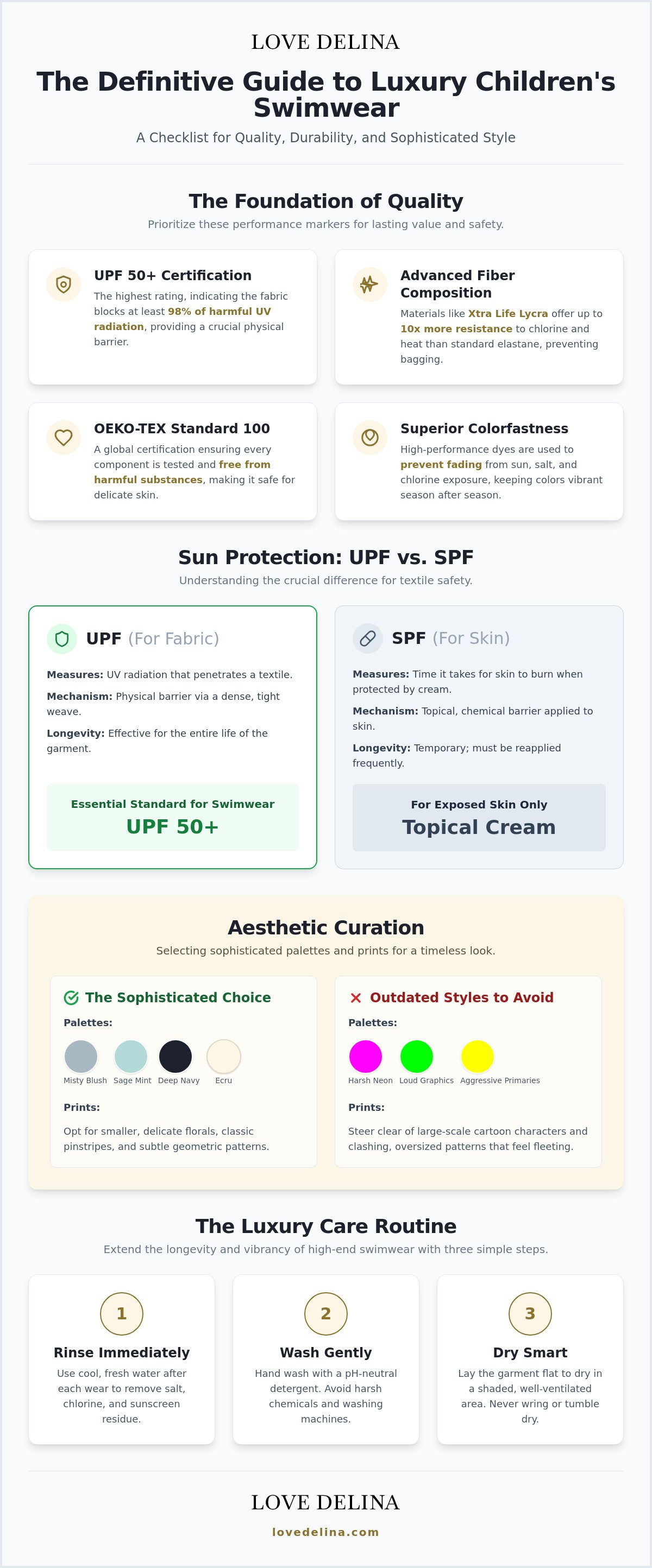
To ensure your selection meets the highest standards of craftsmanship, prioritize these performance markers:
- UPF 50+ Certification: This rating indicates the fabric blocks at least 98% of harmful UV radiation.
- Advanced Fiber Composition: Look for PBT (Polybutylene Terephthalate) or Xtra Life Lycra, which provide superior resistance to bagging and sagging.
- OEKO-TEX Standard 100: This ensures every thread and button is tested for harmful substances, protecting delicate skin.
- Colorfastness: High-performance dyes prevent the vibrant palettes from thinning or fading prematurely.
Understanding UPF vs. SPF in Children's Textiles
It's a common misconception that SPF and UPF are interchangeable. While SPF measures the time it takes for skin to burn with a topical cream, UPF measures the amount of UV radiation that actually penetrates a textile. High-quality fabrics achieve a UPF 50+ rating through a dense, tight weave rather than temporary chemical coatings that eventually wash away. This physical barrier remains effective throughout the garment's life. For parents, 50+ is the essential threshold for luxury children's swimwear to ensure uncompromising safety under the summer sun.
The Science of Shape Retention and Stretch
Nothing diminishes a curated beach look faster than a sagging silhouette. To prevent the "saggy swimsuit" effect, look for high-denier fibers and premium materials that offer ten times the resistance to chlorine and heat compared to standard elastane. These materials are vital for maintaining the structure of bikini sets and one-piece designs.
A simple "four-way stretch" test reveals the garment's quality. Pull the fabric both vertically and horizontally; it should snap back to its original form instantly. This flexibility is vital for active children who require a full range of motion. Additionally, double-lined pieces provide a structured fit that maintains its shape and modesty even when wet. Quality kids swimwear utilizes these advanced techniques to ensure the garment looks as polished at the end of the season as it did on the first day of vacation.
Aesthetic Curation: Selecting the Right Silhouette and Palette
Selecting a summer wardrobe requires a discerning eye for both form and function. While mass-market options often lean into loud, neon graphics, luxury kids swimwear embraces a more restrained approach. The goal is to find a balance where the visibility factor, essential for water safety, intersects with a polished, high-end aesthetic. Modern textiles allow for a high UPF rating without the need for garish chemical dyes or clashing patterns that disrupt a curated family aesthetic.
The Sophisticated Palette: Beyond Primary Colors
The 2026 color landscape for children's fashion has shifted toward "Ocean-Inspired Neutrals" and "Jelly Pastel Tones." Muted earth tones and the timeless appeal of Ecru have replaced the aggressive primaries of the past. These shades don't just look sophisticated; they also tend to harmonize more effectively with the natural textures of sand and sea. When you choose children's bikinis in shades like Sage Mint, Misty Blush, or Deep Navy, you create a cohesive look that mirrors the refined palettes of adult resort wear.
To ensure your color choices remain vibrant despite sun and salt, consider these selection criteria:
- Depth of Tone: Muted tones like Iced Aquamarine offer visibility without the harshness of neon.
- Print Scale: Smaller, delicate florals and classic pinstripes provide a more sophisticated air than large-scale cartoons.
- Coordination: Selecting a base color like Ecru allows for effortless mixing and matching across different sets.
Choosing Silhouettes for Comfort and Style
The silhouette dictates the mood of the vacation. A classic one-piece offers a timeless, athletic elegance that feels appropriate for a luxury beach club. Conversely, ruffle-trimmed kids swimwear or an Ecru Ruffled Off-The-Shoulder Top paired with matching bottoms provides a playful yet polished charm. These designs are specifically crafted to transition seamlessly from a morning dip to a seaside lunch, especially when paired with a light sarong or linen trousers.
Practicality remains a cornerstone of luxury. While an off-the-shoulder cut offers a high-fashion silhouette, ensure the design includes internal grip or adjustable features to maintain a secure fit during active play. For long days under the Mediterranean sun, rash guard sets in coordinated palettes provide the most comprehensive protection while maintaining a sharp, intentional look. You can explore our curated collection to find pieces that balance these artistic silhouettes with the demands of an active summer.
Practical Fit and Growth Considerations
Precision in fit ensures that high-end kids swimwear remains functional during active seaside play. While aesthetic appeal is paramount, a garment that sags or digs into the skin fails the test of luxury. Achieving a sophisticated silhouette requires more than just selecting the right age bracket. It demands an understanding of how fabric interacts with a child's movement and growth patterns. A discerning parent looks for garments that offer both immediate comfort and a degree of intentional adaptability.
To secure a fit that mirrors the quality of the tailoring, prioritize these structural checks:
- Torso Measurement: Measure from the highest point of the shoulder, through the legs, and back to the shoulder. This "loop" measurement is the most accurate way to prevent straps from slipping or the seat from sagging.
- Soft Elasticity: Inspect the leg openings for soft, encased elastic. This prevents the red marks and chafing that often occur with lower-quality finishes.
- The Pinch Test: Gently pinch the fabric at the shoulder straps. You should have enough room for two fingers to slide underneath comfortably, but the fabric shouldn't pull away more than an inch from the body.
- Adjustable Hardware: Seek out tie-shoulder details or internal drawstrings. These elements allow a piece to evolve alongside your child, extending its life across a full season of growth.
The Danger of 'Sizing Up' in Swimwear
It's tempting to purchase a larger size to ensure the garment lasts longer, yet excess fabric poses a genuine safety risk. Loose material creates significant drag in the water and can easily snag on pool filters or ladders. High-end brands solve this dilemma by utilizing superior four-way stretch textiles that accommodate growth without compromising the garment's integrity. For the most effective protection, sun-protective clothing must fit snugly against the skin; if the fibers are stretched too thin or hang too loosely, the UPF efficacy can diminish. A perfect fit ensures the textile remains a reliable shield against UV radiation.
Hardware and Finishes Checklist
Luxury is defined by the details that often go unnoticed until they fail. When evaluating zippers, plastic is always the superior choice for coastal environments. Unlike metal, plastic won't corrode from salt water or become uncomfortably hot under the midday sun. High-quality kids swimwear also features "zipper garages," which are small fabric tabs that cover the zipper pull at the neck to prevent skin irritation. Finally, ensure that any decorative elements, such as tassels or beads, are double-stitched and securely fastened to meet rigorous safety standards while maintaining a polished look.
Maintenance and Longevity: The Luxury Care Routine
Preserving the integrity of high-end kids swimwear requires a shift from convenience toward intentionality. While mass-market garments are often treated as disposable, luxury pieces are engineered for longevity, provided they receive meticulous care. The sophisticated textiles discussed earlier, such as Xtra Life Lycra, are resilient but not indestructible. Proper maintenance ensures that the vibrant Ecru tones and delicate ruffles remain as striking as the day they were first worn.
To maintain the structural and aesthetic quality of your collection, adopt this professional care sequence:
- Immediate Fresh-Water Rinse: Rinse the garment in cold, fresh water immediately after every dip. This removes residual chlorine and salt before they can begin to degrade the elastic fibers.
- pH-Neutral Detergent: Use only mild, pH-neutral detergents designed specifically for delicates. Harsh chemical cleaners can strip the fabric of its protective coatings and dull the color palette.
- The Towel Roll Technique: Never wring or twist the fabric to remove water. Instead, lay the piece on a clean, dry towel and roll it up gently to absorb excess moisture.
- Shaded Drying: Dry garments flat in a shaded area. Direct sunlight is a primary cause of UV-induced fading and can cause the fine fibers to become brittle over time.
- Complete Dryness for Storage: Ensure the suit is entirely dry before storing it. Even a hint of moisture can lead to mildew and permanent fabric degradation.
Why the Washing Machine is the Enemy of Swimwear
The mechanical agitation of a washing machine is far too aggressive for the fine elastane fibers found in premium suits. This movement causes the fibers to stretch and snap, leading to the dreaded "baggy" look. Heat is the primary catalyst for fiber degradation. Dryers and hot water effectively cook the elastic, causing it to lose its memory and snap-back ability. For a deep clean after a vacation, soak the garment in cool water with a teaspoon of delicate wash for twenty minutes, then rinse thoroughly by hand.
Pre-Treating for Sand and Sunscreen
Sand often becomes trapped within the tight weave of high-performance fabrics. To remove it, wait until the garment is completely dry, then gently stretch the fabric and use a hair dryer on a cool setting to blow the grains out of the knit. Sunscreen stains are particularly problematic for light-colored pieces, as oil-based formulas can leave yellow residues. Apply a small amount of mild dish soap to the dry stain before rinsing to lift the oils. Finally, allow the garment to "rest" for at least 24 hours between wears. This gives the fibers time to return to their original shape, ensuring the silhouette remains sharp. To build a collection worth this level of care, explore our range of premium swimsuits for kids designed with both beauty and durability in mind.
The Resort-Ready Wardrobe: Final Selection Checklist
The final stage of preparation involves curating a collection that feels both effortless and intentional. A sophisticated resort wardrobe isn't about volume; it's about selecting a few high-performance pieces that work in harmony. To ensure a seamless experience at your coastal getaway, your selection of kids swimwear should be guided by a final review of rotation and coordination. A well-planned suitcase allows you to focus on the experience rather than the logistics of dressing.
To finalize your summer edit, confirm your collection meets these resort-ready standards:
- Rotation Strategy: Include at least two swimsuits to allow for proper drying and fiber recovery between wears.
- Aesthetic Harmony: Coordinate each piece with kids beachwear essentials like woven hats or soft sarongs.
- The Comfort Test: Ensure every item has been tried on to confirm there's no digging at the shoulders or chafing at the legs during long days of play.
- Understated Luxury: Opt for silhouettes and colors that reflect a polished, timeless persona rather than fleeting, loud trends.
Building a Kids' Swim Capsule
A versatile capsule wardrobe balances maximum protection with high-end style. We recommend a pairing of one protective rash guard set for peak sun hours and one elegant kids bathing suit for afternoon poolside lounging. This combination allows for a smooth transition from active water play to more relaxed resort settings. When the sun begins to dip, having a coordinated cover-up is essential.
The transition from the shore to a resort lunch is effortless when your kids swimwear is paired with elevated separates. A piece like the Mini Skirt With Flowers in Ecru or the Ecru Ruffled Off-The-Shoulder Top can be layered quickly to maintain a polished look. Love Delina’s curated approach simplifies this process for parents, offering a range of silhouettes that maintain a consistent aesthetic of refined elegance across the entire collection.
Final Quality Check Before the Trip
Before you close the suitcase, perform one last assessment based on our fabric and fit standards. Review the textiles for the density of the weave and confirm that all adjustable elements, such as tie-shoulders, are functioning perfectly. This final check guarantees that your children will feel as comfortable as they look, regardless of the day's activities.
Investing in quality over quantity is the hallmark of a discerning parent. By choosing long-lasting, sustainable pieces, you reduce the need for seasonal replacements and build a wardrobe that can be passed down. Once you've verified your checklist, you're ready for an unforgettable summer. We invite you to explore the Love Delina children's collection to discover the final pieces for your next sophisticated getaway.
Curating Your Next Coastal Escape
Selecting the ideal summer wardrobe is a deliberate act of balancing protective performance with a refined visual identity. By prioritizing high-density weaves with UPF 50+ ratings and choosing silhouettes that offer both comfort and growth adaptability, you ensure your child remains safe and stylish. The longevity of these premium pieces depends on a meticulous care routine, which allows your curated collection to endure through seasons of sun and salt.
The modern family aesthetic is defined by an appreciation for craftsmanship and understated luxury. High-quality kids swimwear should be more than a seasonal purchase. It's an investment in artistry and textile integrity. When you focus on quality over quantity, you create a beach wardrobe that is as durable as it is beautiful.
Ready to finalize your summer edit? Discover the Curated Children's Swimwear Collection at Love Delina. Our collection features limited-edition designer styles crafted from high-performance UPF 50+ fabrics in sophisticated resort-ready palettes. We invite you to embrace a summer of effortless elegance and uncompromising quality.
Frequently Asked Questions
What is the best fabric for kids swimwear?
The most resilient fabric for premium kids swimwear is a high-denier blend of polyester and PBT or Xtra Life Lycra. These materials provide exceptional resistance to chlorine and salt water while maintaining their shape over time. Unlike standard nylon blends that may thin or sag, these advanced textiles ensure the garment retains its structural integrity and vibrant color throughout a busy summer season of frequent use.
How often should I replace my child's swimsuit?
A high-quality swimsuit should be replaced once the fabric shows signs of thinning or the elastic no longer snaps back to its original shape. While luxury pieces often last several seasons due to superior fiber density, children's rapid growth cycles usually necessitate an update every one to two years. Regularly check the leg openings and straps for signs of wear to ensure continued comfort and safety for your child.
Does UPF 50+ swimwear really work?
UPF 50+ textiles are highly effective at blocking 98% of the sun's harmful rays through a specialized tight-weave construction. This protection is a physical property of the fabric itself, meaning it doesn't wash out like topical chemical treatments found in lower-end garments. For discerning parents, this rating offers a reliable and consistent shield that remains effective even when the material is wet during long afternoons at the beach.
Can I put my child's luxury swimsuit in the dryer?
Dryers are prohibited for luxury swimwear because the extreme heat causes the delicate elastane fibers to break down and lose their elasticity. This damage results in permanent sagging and a compromised fit that cannot be repaired. To preserve the garment's memory and sophisticated silhouette, always dry your pieces flat in a shaded area. This gentle approach ensures the fabric remains supple and the colors stay vibrant for much longer.
How do I choose the right size for a kids swimsuit online?
The most accurate way to size kids swimwear online is to use the torso loop measurement rather than relying on age-based charts. Measure from the highest point of the shoulder, down through the legs, and back up to the starting point. A perfect fit should be snug against the body without digging into the skin or restricting movement. If your child is between sizes, consider the specific stretch properties of the designer's fabric.
What are the most visible swimsuit colors for water safety?
Neon shades such as bright orange, yellow, and lime green offer the highest visibility for water safety in both pools and open water. While a sophisticated palette often favors muted earth tones or Ecru, you can find designer pieces that incorporate high-contrast accents for safety without sacrificing a polished aesthetic. Choosing a suit that stands out against the blue of the water ensures your child is easily spotted by lifeguards and parents.
Is there a difference between a bathing suit and a swimsuit?
The terms bathing suit and swimsuit are functionally identical, though they carry different linguistic nuances depending on the region and the era. "Bathing suit" is often considered a more traditional or formal term, while "swimsuit" is the contemporary standard used by modern designers. In the realm of high-end fashion, both terms are used interchangeably to describe curated collections that prioritize artistic silhouettes and advanced textile performance for the modern traveler.
How do I get sunscreen stains out of children's swimwear?
Sunscreen stains are best treated by applying a mild, grease-cutting dish soap directly to the dry fabric before the garment is rinsed. Gently work the soap into the fibers with your fingers to lift the oils, then allow it to sit for ten minutes before rinsing in cool water. Avoid using bleach or aggressive stain removers, as these can damage the delicate knit and cause permanent discoloration on light-colored luxury suits.


