



The white bikini is far from the high-risk gamble it is often portrayed to be. In reality, it stands as the most enduring investment in a curated resort wardrobe, offering a level of effortless sophistication that bold patterns simply cannot match. You have likely felt that familiar hesitation at the boutique, wondering if the pristine fabric will betray you the moment it meets the water or if sunscreen will leave a permanent mark on the delicate fibers. It is a common anxiety that often keeps the most discerning travelers from embracing this iconic silhouette.
You deserve to feel entirely composed and confident, whether you are lounging poolside or emerging from the surf. We will show you why a premium white bikini remains a timeless luxury staple and share the professional secrets to maintaining its pristine, opaque elegance. This guide explores the technical importance of fabric weight and specialized linings, provides guidance on selecting the perfect shade for your skin tone, and outlines the essential care rituals that prevent yellowing for seasons to come.
Key Takeaways
- Understand how technical fabric density, measured in GSM, and strategic nude linings ensure your white bikini remains flawlessly opaque even when wet.
- Identify the specific nuances of white and ecru that best complement your skin's natural undertones for a sophisticated and luminous aesthetic.
- Implement the essential 30 minute rinse ritual to preserve the integrity of luxury textiles against the harsh effects of chlorine and salt.
- Learn to elevate your poolside silhouette into a complete resort look by layering with textured fabrics and transparent panel accents.
The Enduring Allure of the White Bikini in Resort Fashion
White possesses a unique ability to capture and reflect light. This creates a luminous effect on the skin often described as the "effortless resort glow." Unlike seasonal prints that date quickly, the white bikini remains a permanent fixture in the luxury fashion lexicon. It signals a certain level of confidence and a commitment to aesthetic purity. Choosing white is an intentional act of curation; it prioritizes a timeless silhouette over fleeting, loud trends. It’s the visual shorthand for a life of leisure and refinement.
The history of the bikini reveals its transformation from a provocative mid-century debut to a symbol of cinematic glamour in the 1960s. Today, this legacy continues through 2026’s minimalist luxury trends, where clean lines and stark whites dominate the most exclusive shorelines. Despite the perceived difficulty of maintenance, white remains the most searched swimwear color globally. This enduring popularity stems from its unparalleled ability to look both athletic and ethereal, depending on the cut and the wearer’s styling.
A Staple of the Sophisticated Summer Wardrobe
A curated resort collection relies on pieces that offer maximum versatility. White serves as the ultimate neutral canvas. It allows bold gold jewelry, oversized straw hats, or vibrant silk sarongs to take center stage without competition. When browsing women's bikini sets online, the discerning shopper looks for silhouettes that transition seamlessly from a private cabana to an afternoon on a yacht. In elite beach club environments, a pristine white ensemble acts as a quiet status symbol. It suggests the wearer understands the nuances of high-end fabric and the care required to maintain such an exacting standard.
Identifying the Common Myths
Despite its allure, many women hesitate to invest in white swimwear due to several persistent misconceptions. These anxieties often stem from experiences with low-quality garments rather than the color itself. We need to address these concerns to move from a mindset of "high maintenance" to one of "high quality."
- The 'Single-Use' Fallacy: There is a belief that white fabric is destined to yellow or stain after one weekend. This ignores the advancements in chlorine-resistant fibers and specialized textile treatments found in designer collections.
- The 'Tan-Only' Requirement: Many assume white only suits deeply bronzed skin. In reality, a crisp white bikini provides a stunning, fresh contrast against fair skin tones, especially those with cool undertones.
- The 'Wet-Look' Worry: The fear of transparency is the most significant barrier. While this concern is valid for fast-fashion pieces, it is effectively solved through technical craftsmanship, such as high-density knits and strategic lining.
Myth 1: 'All White Bikinis Become See-Through When Wet'
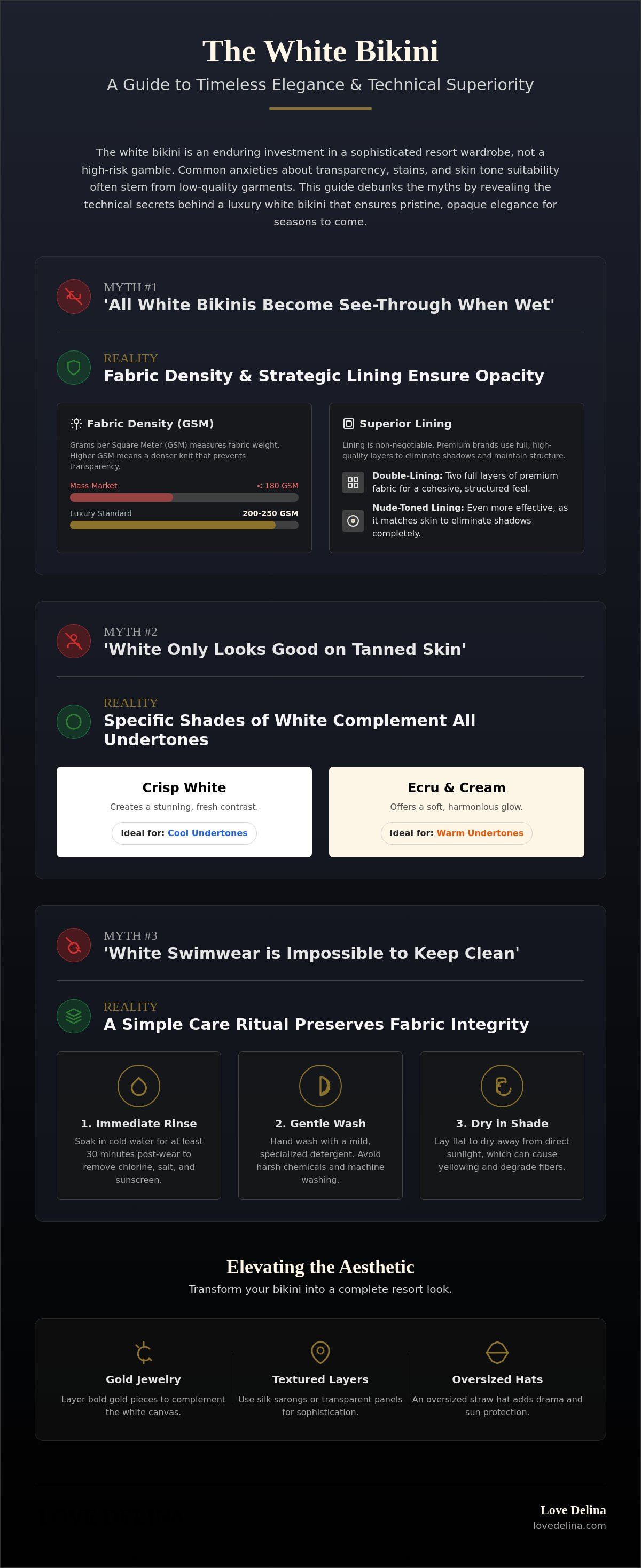
A white bikini should feel like a second skin, but never a transparent one. The anxiety surrounding transparency often stems from poor-quality textiles found in mass-market fashion. Luxury swimwear distinguishes itself through rigorous opacity standards. This is not about the color itself; it is about the technical density of the knit. High-end garments are designed to maintain their integrity, ensuring you feel entirely composed whether you are lounging or swimming.
Fabric weight is measured in Grams per Square Meter (GSM). While standard swimwear might use lighter fabrics to cut costs, a premium white bikini typically utilizes a density of 200 to 250 GSM. This higher weight ensures that the fibers remain tightly packed even when stretched across the body, creating a physical barrier against light. Double-lining, which involves using two full layers of high-quality fabric rather than a single layer or a thin mesh insert, is the non-negotiable standard for any white swimwear claiming luxury status.
The Science of High-Quality Lining
Luxury brands often favor "self-lining." This means the interior layer is the exact same premium fabric as the exterior. It creates a cohesive, structured feel that prevents the "contouring" effect where thin fabrics cling to every anatomical detail. High-quality lining also provides a neutral base. Many designers now use a nude-toned lining which is even more effective at maintaining opacity than white-on-white, as it eliminates shadows against the skin.
Before purchasing, use the "hand-stretch" method. Place your hand inside the garment and stretch the fabric firmly. If you can see the distinct outline of your skin or knuckles through the material while it is dry, it will almost certainly become sheer once submerged in water. Understanding how to properly care for your swimwear is vital, but care cannot fix a lack of initial fabric quality.
Texture as a Design Solution
Texture is not just an aesthetic choice; it is a functional one. Ribbed fabrics, piqué, and honeycomb weaves add physical depth and dimension to the garment. These raised patterns create shadows and varying thicknesses that naturally prevent light from penetrating the fabric. They offer a tactile richness that flat fabrics cannot replicate.
A Jacquard weave or a piqué texture offers the highest level of confidence. These fabrics are inherently thicker and more structured than smooth, flat lycra. While a smooth silhouette offers a classic, sleek look, a textured finish provides an extra layer of security. For those seeking the ultimate in resort elegance, exploring sophisticated bikini sets with these tactile details ensures a worry-free experience from the lounge to the sea.
Myth 2: 'White Only Looks Good on Tanned Skin'
The belief that a white bikini requires a deep, sun-kissed tan is one of the most persistent barriers to embracing this classic look. This perspective overlooks the architectural power of white as a color. It’s about contrast and harmony, not just matching a specific skin depth. A well-chosen white piece can illuminate the complexion, creating an ethereal and polished presence that feels entirely modern. You don't need to wait for a mid-August glow to feel confident in a light-reflecting palette.
Luxury resort wear is defined by its nuance. Instead of a one-size-fits-all approach, consider the temperature of the white you select. White exists on a spectrum, from the sharpest optic shades to the softest, most buttery creams. Understanding where you sit on this spectrum allows you to use the color as a tool to enhance your natural skin tone rather than fight against it.
Matching Whites to Your Undertone
Those with cool undertones, often characterized by blue or purple veins and a tendency to burn, should reach for crisp, blue-based whites. This starkness creates a striking, high-fashion contrast that looks intentional and fresh. Conversely, if your skin has warm or olive undertones, the softer elegance of cream or ivory is often more flattering. Exploring monochromatic ecru outfits provides a blueprint for using these warmer, off-white shades to achieve a sophisticated, tonal aesthetic. For neutral undertones, champagne and pearl shades offer a balanced, luminous finish that works year-round.
Silhouette Selection for Impact
The silhouette you choose plays a vital role in how the color is perceived against your skin. High waisted bikini sets, for instance, provide a bold, continuous block of color that acts as a deliberate focal point. This structural approach makes the white bikini feel like an architectural style choice. Hardware and detailing offer the final touch of customization. Gold accents tend to bring out the warmth in the skin, making them a natural partner for ecru and ivory. Silver hardware complements cooler complexions and bright, optic whites. By shifting the focus from the depth of your tan to the harmony of your palette, white becomes an accessible staple for every discerning traveler.
Myth 3: 'White Swimwear Is Impossible to Keep Clean'
Maintaining a pristine white bikini is often viewed as a daunting task, yet it's simply a matter of disciplined care. The elegance of a white silhouette relies on its absolute purity. When that purity is compromised by yellowing or stains, the luxury aesthetic vanishes. However, these issues are rarely the fault of the fabric itself. They're the result of chemical reactions that can be managed with a professional approach to maintenance.
The true enemies of white textiles are often invisible. Chlorine, sea salt, and the complex chemicals found in traditional sunscreens are the primary causes of fiber degradation and discoloration in a white bikini. Salt and chlorine must be removed from the fabric within 30 minutes of use to prevent them from drying into the knit. Mineral-based sunscreens containing zinc or titanium dioxide are significantly safer for luxury white fabrics than chemical alternatives, which frequently cause stubborn orange oxidation stains. Once you've enjoyed your time in the sun, storage is equally critical. You should never store white swimwear in plastic bags, as they trap residual moisture and heat; this creates an environment that accelerates yellowing and bacterial growth.
The Professional Cleaning Protocol
A meticulous cleaning routine ensures your swimwear lasts for multiple seasons. Start with a 15 minute soak in cold water using a pH-neutral delicate wash specifically formulated for Lycra. Avoid the temptation to wring the garment, as this breaks down the elastic fibers and distorts the silhouette. Instead, lay the piece flat between two clean, light-colored towels and press gently to remove excess moisture. While it's tempting to use bleach to restore brightness, it is far too aggressive for high-end swimwear; instead, rely on natural whitening agents like a diluted white vinegar soak to neutralize chemicals and maintain that crisp, optic finish.
Dealing with Discoloration
Even with careful use, yellowing can occur due to oxidation over time. These faint shadows can often be spot-treated with a paste of baking soda and water before a standard soak. Sunscreen rings around the neckline require immediate attention with a gentle, oil-dissolving detergent. For limited-edition pieces that require the highest level of care, consider professional "wet cleaning." This specialized process uses water and biodegradable soaps rather than harsh dry-cleaning solvents to restore the garment’s integrity. To build a resort wardrobe that stands the test of time, explore the curated bikini sets available at Love Delina, where technical excellence meets sophisticated design.
Elevating the Aesthetic: Styling the White Bikini for 2026
The white bikini is not merely a swim garment; it is a foundational element of a sophisticated resort wardrobe. As we look toward the 2026 season, the most compelling looks move beyond the water's edge. Transitioning from the technical choice of bikini vs one piece to a complete ensemble requires an eye for texture and layering. A high-quality white top possesses enough structure to function as a refined bralette, pairing seamlessly with high-waisted trousers or open silk shirts. This versatility allows you to curate a cohesive capsule where every piece serves multiple purposes.
The "White-on-White" trend remains a dominant force in minimalist luxury. This aesthetic relies on the interplay of different textiles to create depth. Imagine a crisp, matte white bikini layered under a sheer, floor-length cover-up or a heavy linen button-down. The variation in opacity and weight prevents the look from feeling flat. It creates a silhouette that is both airy and grounded. By using white as your foundation, you allow the craftsmanship of your separates to take center stage, projecting a sense of quiet confidence and curated elegance.
Beach-to-Bar Transitions
Effortless transitions are the hallmark of a seasoned traveler. For a polished afternoon look, consider pairing your bikini with the Mini Skirt With Flowers in Ecru. The subtle tonal shift from stark white to soft ecru adds a layer of sophistication that feels more intentional than a perfect match. To maintain an understated luxury vibe, opt for oversized linen shirts in neutral tones and leather slides. Jewelry should be sculptural and minimal; a single gold cuff or a pair of textured hoops provides just enough light-reflection to complement the radiant effect of the white fabric.
Investing in Timelessness
Choosing a high-quality white silhouette is a commitment to sustainable style. While trend-driven prints often feel dated after a single season, a well-maintained white piece remains relevant year after year. Building a collection of swim wears for ladies that prioritizes technical excellence over fleeting patterns is the ultimate investment in your personal brand. Before your next getaway, ensure your resort kit is complete with this final checklist:
- A high-GSM bikini set with double-lining for guaranteed opacity.
- A mineral-based, fabric-safe sunscreen to prevent oxidation stains.
- Linen or silk separates in ecru and ivory for tonal layering.
- A pH-neutral delicate wash for immediate post-swim care.
- Breathable cotton storage bags to maintain fabric brightness during travel.
Embracing a New Era of Resort Elegance
The white bikini is no longer a high-risk choice; it is a declaration of technical mastery and aesthetic intent. By prioritizing high-GSM luxury fabrics and understanding the nuances of color theory, you can move beyond common anxieties regarding transparency and maintenance. Whether you choose a crisp optic shade or a sophisticated ecru palette, these pieces serve as the perfect foundation for a curated resort capsule that transcends seasonal trends. A commitment to quality ensures that your summer staples remain as luminous and structured as the day you first wore them.
It is time to shift your perspective from the temporary to the timeless. You now possess the professional secrets to style, maintain, and wear white with absolute poise. Discover the Curated White Bikini Collection at Love Delina to explore our limited-edition designer silhouettes crafted for total confidence. The sun is waiting for your most radiant and refined silhouette yet.
Frequently Asked Questions
How do I know if a white bikini will be see-through before I buy it?
Check the fabric weight and the quality of the lining before making a purchase. A premium white bikini should feature a fabric density of at least 200 GSM and a full double-lining, preferably using the same high-quality material for both layers. You can perform a hand-stretch test by pulling the fabric firmly over your knuckles; if the skin tone is clearly visible through the dry material, the garment will almost certainly become transparent once wet.
Can I use bleach to keep my white bikini bright?
No, you should never use bleach on luxury swimwear. The harsh chemicals in bleach are too aggressive for delicate Lycra and spandex fibers, causing them to lose their elasticity and structural integrity. Bleach can also react with residual chemicals to create a permanent yellow tint rather than a bright finish. Instead, use a pH-neutral delicate wash or a diluted white vinegar soak to maintain the fabric's optic purity.
Why did my white bikini turn yellow and can I fix it?
Yellowing is usually the result of oxidation caused by trapped chlorine, salt, or sunscreen chemicals. These substances bond to the fibers and change color over time when exposed to heat or sunlight. You can often fix mild yellowing by soaking the garment in a solution of cool water and baking soda for 30 minutes. For more significant discoloration, professional wet cleaning is the safest way to restore the original shade without damaging the textile.
Are there specific sunscreens that won't stain white swimwear?
Mineral-based sunscreens are the best option for protecting both your skin and your white fabrics. Formulations that use physical blockers like zinc oxide or titanium dioxide are less likely to cause the stubborn orange or brown stains associated with chemical filters like avobenzone. It is a good practice to apply your sunscreen 20 minutes before dressing to ensure it is fully absorbed and dry before it comes into contact with your swimwear.
Which shade of white is best for very fair skin?
Crisp, optic white is the most flattering choice for fair skin tones, particularly those with cool undertones. This bright, stark shade creates a fresh and luminous contrast that enhances the complexion rather than dulling it. Fashion experts generally suggest that those with very pale skin avoid off-white, cream, or ivory shades, as these warmer tones can sometimes make the skin appear washed out or sallow.
How should I pack a white bikini to avoid stains from other clothes?
Always pack your white swimwear in a separate, breathable garment bag made of cotton or linen. This creates a physical barrier that prevents color transfer from dark denim, leather belts, or vibrant silk pieces that might bleed during travel. Avoid using plastic bags for long-term storage or transit; they trap moisture and heat, which are the primary catalysts for yellowing and the growth of mildew.
Can I wear a white bikini in a chlorinated pool?
You can wear white in a pool, but you must be diligent about rinsing the garment immediately after use. Chlorine is a powerful oxidant that can quickly degrade elastic fibers and cause discoloration if left to dry into the knit. To preserve your white bikini, rinse it thoroughly in fresh, cold water within 30 minutes of leaving the pool to neutralize the chemicals before they can bond to the fabric.
What is the best way to dry a luxury white bikini?
The most effective method is to lay the garment flat on a clean, light-colored towel in a shaded area. Never wring or twist the fabric to remove moisture, as this breaks down the technical fibers and permanently distorts the silhouette. Ensure the drying area is well-ventilated and kept out of direct sunlight; UV rays can act as a catalyst for yellowing and make the high-end fabric feel brittle over time.


